Restaurant online visibility: how menu photos turn into orders
It's nine on a Friday night, the kitchen is full, orders keep coming in — it looks like business is good. At the same moment, somewhere else, a hungry person opens a delivery app, types "nearby", and five or six restaurant cards line up on the screen. Yours has a dark photo, shot in a hurry under yellow kitchen light, slightly off-angle. The look lasts a second, the thumb keeps scrolling, the order goes to the place next door — and you never find out, because the phone simply never rang.
Restaurant owners put real effort into the kitchen, the room, the way a plate is arranged on the table. But the three surfaces a guest actually sees before ever sitting down — the Google Maps profile, the card inside a delivery app, the restaurant's own Instagram or website — rarely get the same attention. The result: great food, good service, and an empty table on a night when a plainer place down the street is full.
Menu photos: why "the food tastes great" isn't an argument here
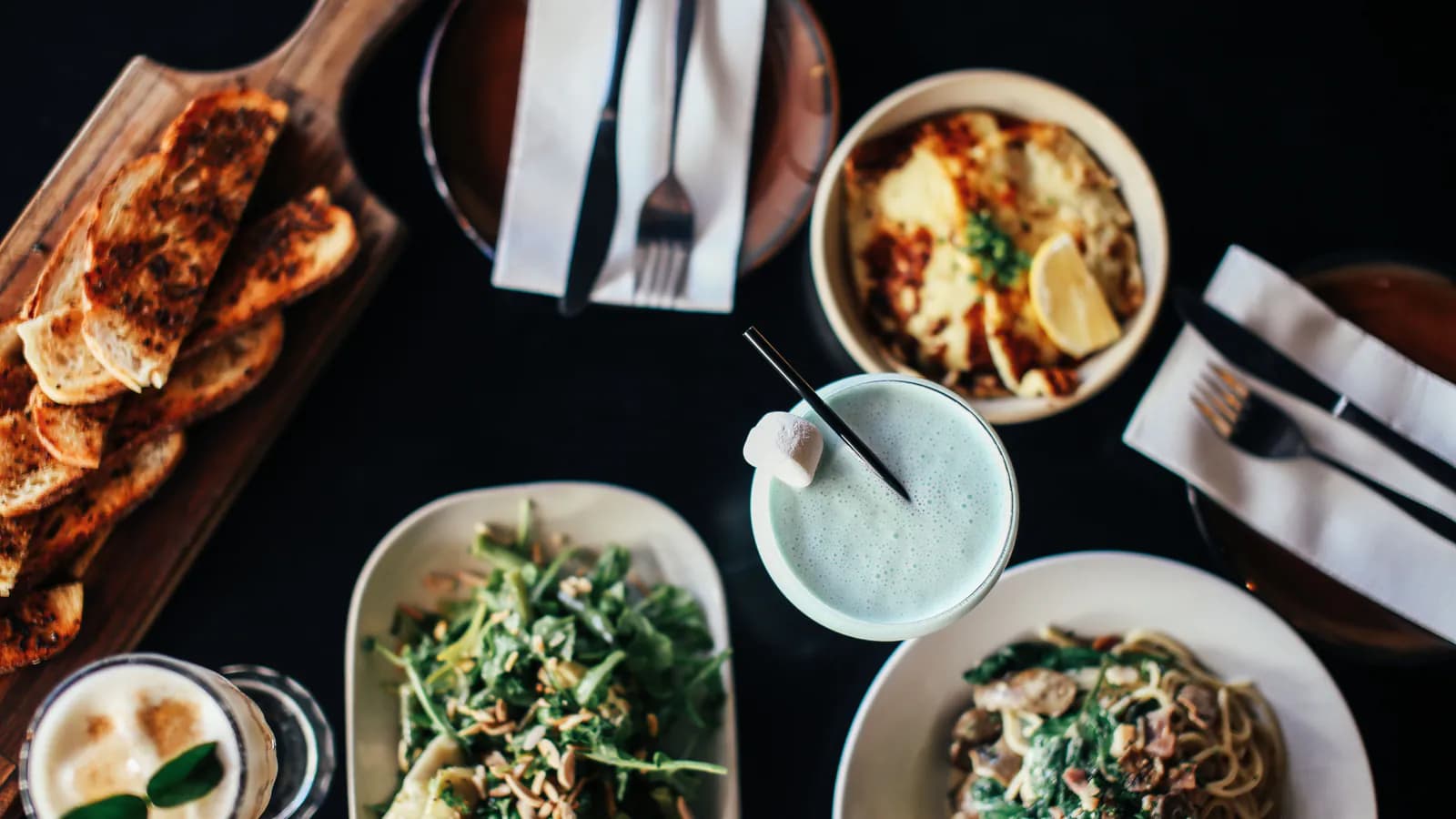
Inside a delivery app, a guest doesn't read, they scan. The choice between cards in a grid happens in seconds, and photo quality decides it, not the description underneath. A photo taken in a rush, under yellow side lighting instead of daylight from above, looks flat and unappetising in a small card no matter how good the dish actually tastes — the screen gives it a couple of centimetres, and the detail simply disappears.
The fix costs nothing but time: shoot in daylight, near a window, straight from above. Give every dish its own photo instead of stretching one "collage" image across the whole menu. Start with the five or six best-selling items and add the rest over the following week.
The mismatch between platforms
A common pattern: fresh, well-lit photos on the delivery app, and an old picture — or none at all — on Google Maps. A guest sometimes checks both before deciding, and the mismatch reads as neglect: "this listing hasn't been touched in a while." Photo quality needs to match across the map profile, the delivery app and the restaurant's own social feed.
The Google Maps profile: the restaurant's second front door
When someone types "restaurant near me" on their phone, a map block sits at the top of the results — three or four business cards, each with a photo, a rating, an open/closed status. A restaurant with an unclaimed or half-filled profile either misses that block entirely or shows up looking unreliable: outdated hours, a broken menu link, no photo.
Filling in the profile is free and takes ten to fifteen minutes: claim it, update hours, address, phone number and the menu link, add a handful of good photos, reply briefly to reviews. For local search this profile often brings in more enquiries than the website itself, because the guest decides right there on the map and never clicks through.
The delivery platform: the order is yours, the contact stays theirs
Month after month, dozens of orders come in through Wolt, Bolt Food or Glovo, and the restaurant never once sees the guest's name, phone number, or how many times they've ordered before — that data stays inside the platform's own system. The platform keeps a share of every order and holds on to the relationship with the guest; for the restaurant, that same person gets "rediscovered" from zero every single time, because there's no direct way to reach them.
The fix isn't dropping the platform — for a first introduction it's unmatched, putting you in front of thousands of users even with no ad budget at all. But printing your Instagram handle or a direct-order number on the packaging, the receipt, or a small card handed over with delivery is enough to turn a happy guest into a repeat order that comes straight to you, with no cut going to a third party.
Instagram and your own channel: the third touchpoint
Before ordering, a guest often checks the restaurant's Instagram to answer one question: what is this place actually like. If the last post is months old, or the photos are the same rushed quality as everywhere else, the trust built on the map and in the delivery app gets undone right here. The map, the delivery app and Instagram each show up at a different moment in the same guest's decision — if one of the three is weak, it drags the whole impression down with it.
The real difference between platform commission and your own channel
Platforms are unmatched at finding new guests. In exchange they keep a share of every order — the exact rate varies by platform and by the terms each restaurant negotiates, so we won't put a number on it here. What matters is the structural difference: a repeat guest who orders through your own channel — a website, WhatsApp, an Instagram DM — costs no one a cut. There's a one-time setup cost for that channel, and after that it runs close to free.
The practical takeaway: don't fight the platform for a new guest, but move repeat guests toward your own channel over time — one doesn't replace the other, it complements it.
The platform finds the guest for you; your map profile and your own channel are what bring them back — two different jobs, and you need both.
Where to start this week
Three steps are enough: reshoot the best-selling part of the menu in daylight; claim the Google Maps profile and update hours and the menu link; print your own direct contact channel on the receipt or packaging. All three fit into a day or two, and none of them need an ad budget.
If you want your delivery-platform listings and map visibility built to a professional standard, our delivery-platform and map listing service does exactly that — from the photography to the structure of the profile itself, we build every step.